Air Sense Guard
Designing a pollution mask people are willing to wear
A research-driven wearable that combines comfort, protection, and real-time air awareness for everyday urban life.
Air pollution is something we live with every day yet rarely question.While commuting through traffic-heavy roads and walking through dense urban streets, I began noticing how common pollution masks had become and how rarely they were worn properly.
People carried them, pulled them down while talking, removed them after a few minutes, or wore them only when pollution felt visibly extreme. i found this contradiction unsettling. if people are aware that pollution is harmful, why is protection so inconsistent? That question became the starting point of Air Sense Guard.
The problem I noticed is that air pollution is gradual, invisible, and easy to normalize. Unlike immediate dangers, it doesn’t trigger urgency until long-term health effects appear.
Most pollution masks available today focus heavily on filtration performance, but in everyday use they fail because of:
* Heat buildup during long wear
* Breathing resistance
* No feedback about whether the air is actually dangerous
As a result, people remove masks frequently not because they don’t care about health, but because the experience is uncomfortable and unrewarding.
Wouldn’t it be great if people could understand the air they’re breathing, instead of guessing when it’s unsafe?
What makes pollution protection so difficult?
Addressing this problem required a deeper understanding of everyday behaviour, not just statistics.
I conducted informal, in-person research with people who commute daily through traffic-heavy roads and dense urban environments. Although their routines differed, they all expressed uncertainty and frustration around pollution protection.
Some struggled with discomfort during long wear, others didn’t trust whether masks were actually helping, and many admitted they removed masks simply because they couldn’t tell when the air was truly dangerous.

"It feels too hot after a few minutes, especially when I’m walking."

"I pull it down while talking and forget to wear it again."
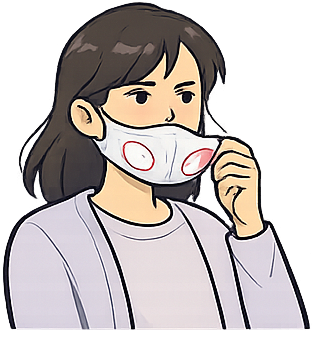
"I only wear a mask when pollution feels really bad."

"I don’t know if the air is dangerous right now or not."
Synthesising the research
By mapping observations and quotes, a few common themes began to emerge:
🫁 “Breathing comfort matters more than filtration on paper.”
Users prioritised how the mask felt over how effective it claimed to be.
🌫️ “Invisible danger doesn’t feel urgent.”
Without real-time feedback, pollution felt abstract and easy to ignore
🔔 “Simple signals change behaviour.”
People responded better to clear cues than warnings or instructions.
Which formed some key insights
* Many users remove masks because discomfort builds quickly
* Pollution feels optional when there is no visible indicator
* Trust increases when users can sense what the product is doing
Understanding different user needs
Frustrations varied between daily commuters and occasional mask users. Personas helped keep these differences visible during design decisions.
Arafa
“I want to be careful, but I don’t want to feel anxious all the time.”
Arafa lives in a busy city area and wears a pollution mask occasionally. She prefers reassurance over constant alerts.
Goals
Feel confident about the air she’s breathing
Avoid stress caused by pollution data
Use something simple and non-medical
Frustrations
Pollution feels confusing and abstract
Too much information increases anxiety
Existing masks feel bulky and clinical
Sanjay
“I want protection, but I can’t wear something uncomfortable every day.”
Sanjay is a daily commuter who walks and uses public transport. He is aware of air pollution risks but finds most masks uncomfortable during long periods of use
Goals
Wear a mask for extended durations
Breathe comfortably while moving
Know when pollution is actually unsafe
Frustrations
Masks feel hot and suffocating
No clear feedback about air quality
Wearing a mask feels unnecessary most days.
Where the focus finally clicked
Arafa and Sanjay are already aware of air pollution and the general risks it poses to their health. They also understand the limitations of existing pollution masks, having experienced discomfort, uncertainty, and inconsistent use firsthand.
At this stage of the project, I chose to focus on users who already recognise the problem but struggle with day-to-day adoption.
Designing for this group allowed me to concentrate on improving comfort, clarity, and trust the core barriers preventing consistent mask usage.
As the product matures, there is an opportunity to support a third user group: people who are less informed about pollution risks and require more guidance and education. However, introducing educational layers too early would risk increasing anxiety and complexity for everyday users.
From understanding people to defining outcomes
With a clearer understanding of Arafa and Sanjay’s motivations and frustrations, I translated their needs into user stories. These stories helped narrow the problem space and provided a concrete foundation for defining what Air Sense Guard should achieve not just technically, but experientially.
As a daily commuter, I want to wear a pollution mask comfortably, so I don’t feel the need to remove it.
As a city resident, I want to know when the air is unsafe, so I can take protection seriously
Establishing design direction
After translating real human struggles into user stories, the next question wasn’t about features, it was about the experience the product should create.
Most pollution masks focus on what they do filter air. But what was missing in user experience wasn’t just filtration it was certainty, comfort, and trust.
People didn’t need more technical options.
They needed something that felt supportive in the moment something that made them know, feel, and trust that they were protected without thinking twice.
So the challenge shifted:
What should this product consistently enable for the user not just technically, but experientially?
That question helped clarify the experience the product needed to deliver, regardless of form or technology.
Air Sense Guard needed to consistently enable three things for the user:
The ability to wear protection comfortably over time.
The confidence to understand when the air is unsafe.
The reassurance that protection is working without constant attention.
These weren’t features to be added later they were conditions the product had to maintain throughout daily use. Any idea that compromised even one of these outcomes would fail, no matter how advanced the technology behind it.
Defining the scope
With these experience goals in mind, it became important to define clear boundaries for the project.
Air Sense Guard was intentionally scoped as a single physical wearable, focused on the moment-to-moment experience of wearing a mask in polluted environments. Expanding into companion apps, dashboards, or long-term exposure analytics at this stage would distract from solving the core problem of comfort and trust.
By narrowing the scope, the project could go deeper into resolving wearability, breathability, and clarity at the point of use where users actually make decisions.
This focus ensured that the design remained grounded in everyday behaviour rather than speculative systems.
Clarifying the value
The value of Air Sense Guard does not come from providing more information, but from reducing uncertainty.
Instead of asking users to interpret data or rely on visible pollution cues, the product offers quiet reassurance. It supports better decisions by making air quality understandable in a way that feels calm and intuitive.
Protection becomes something users trust instinctively, rather than something they consciously manage.
From insight to exploration
The user stories clarified that the problem was not a lack of protection, but a lack of comfort and confidence. Air Sense Guard needed to quietly support everyday use reducing uncertainty while staying comfortable over long durations.
With the scope intentionally focused on a single wearable, the next step was to explore how these experience goals could take physical form.
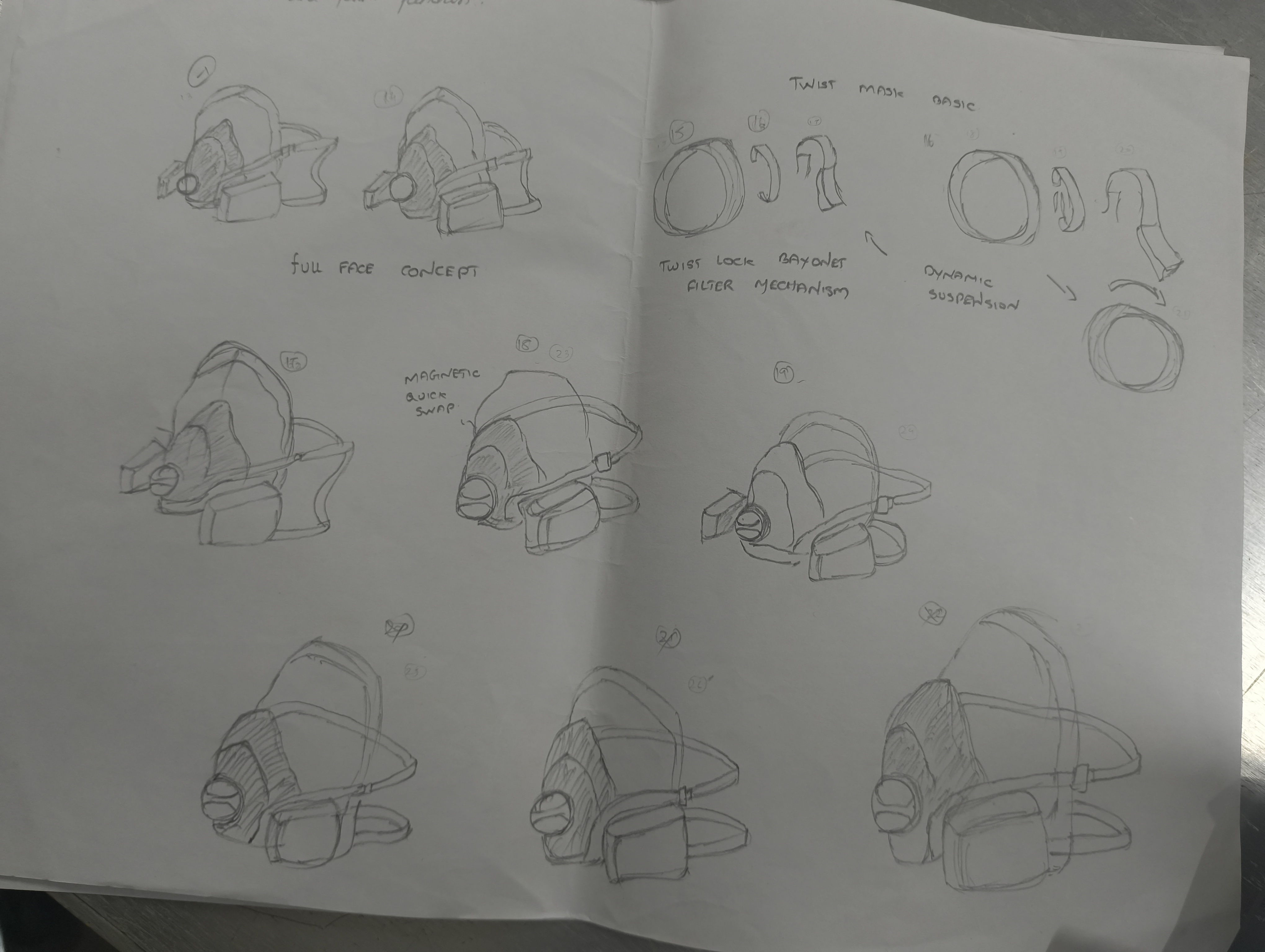
Moving into concept sketches
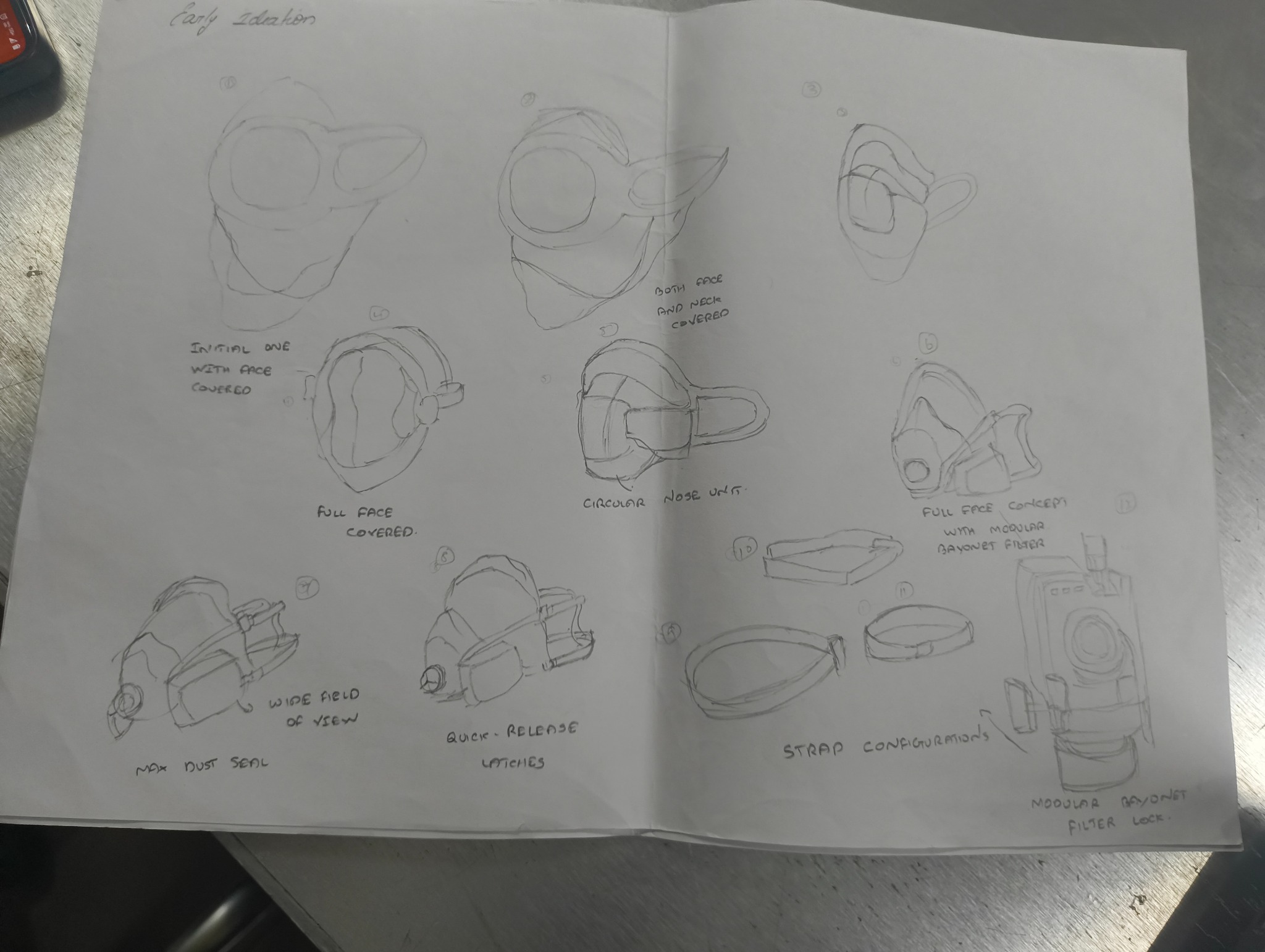
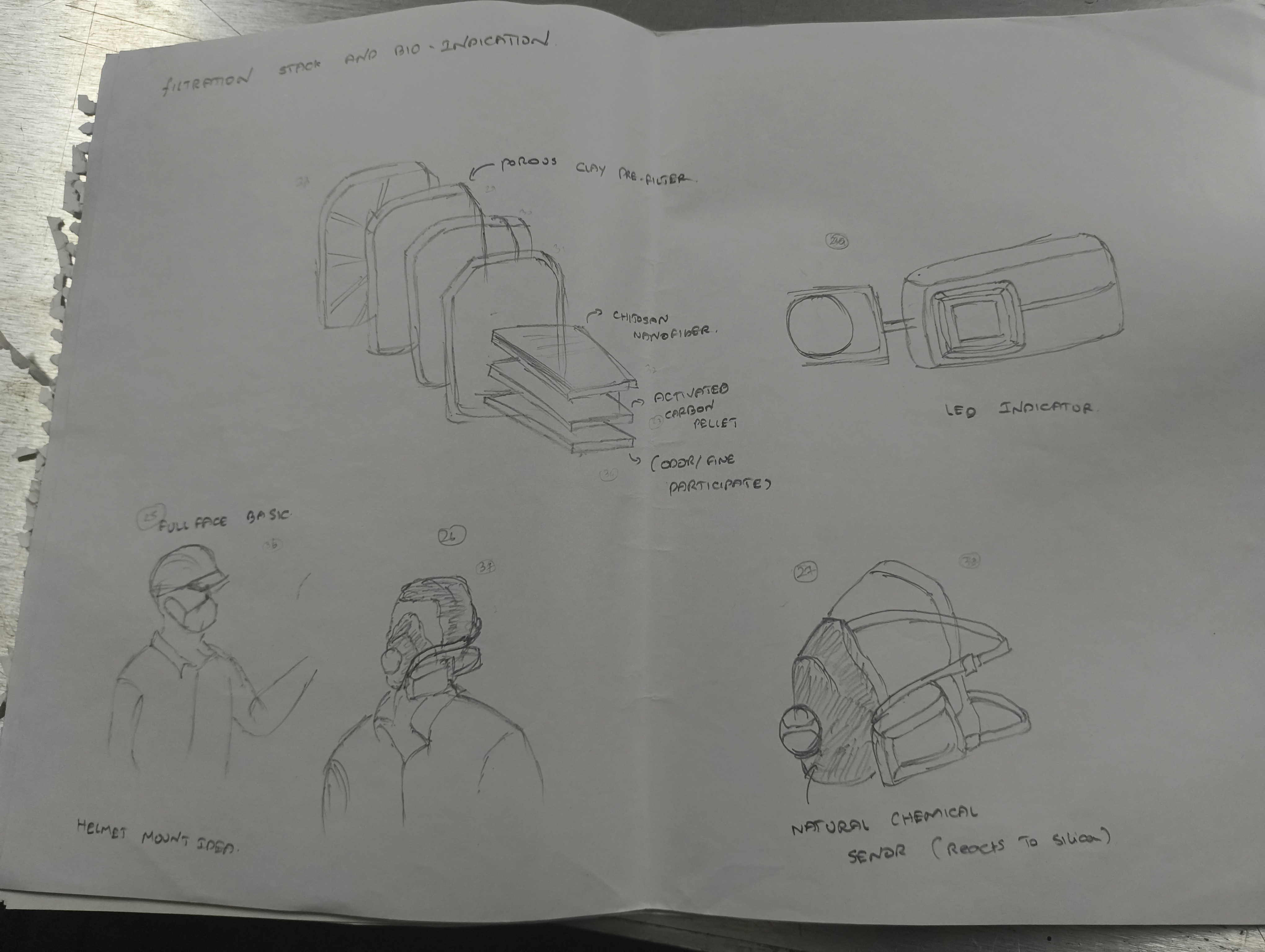
Sketching became a way to think through behaviour before committing to a final design. Instead of refining one idea early, multiple directions were explored to understand how comfort, airflow, filtration, and awareness could coexist without competing for attention.
Converging toward a final concept
As the concept sketches evolved, the focus gradually shifted from exploring possibilities to identifying what truly mattered for everyday use. Early ideas that felt bulky, visually heavy, or overly mechanical were intentionally set aside, as they conflicted with the goal of comfort and long-duration wear.
The sketches that remained shared common qualities: a compact full-face form, balanced proportions, and a quieter visual language. These directions felt more aligned with how people actually move, commute, and live in polluted environments without wanting constant reminders of risk.
This phase was less about adding new features and more about removing friction. Decisions were guided by a simple question: would this make the mask easier to keep on, rather than easier to take off?
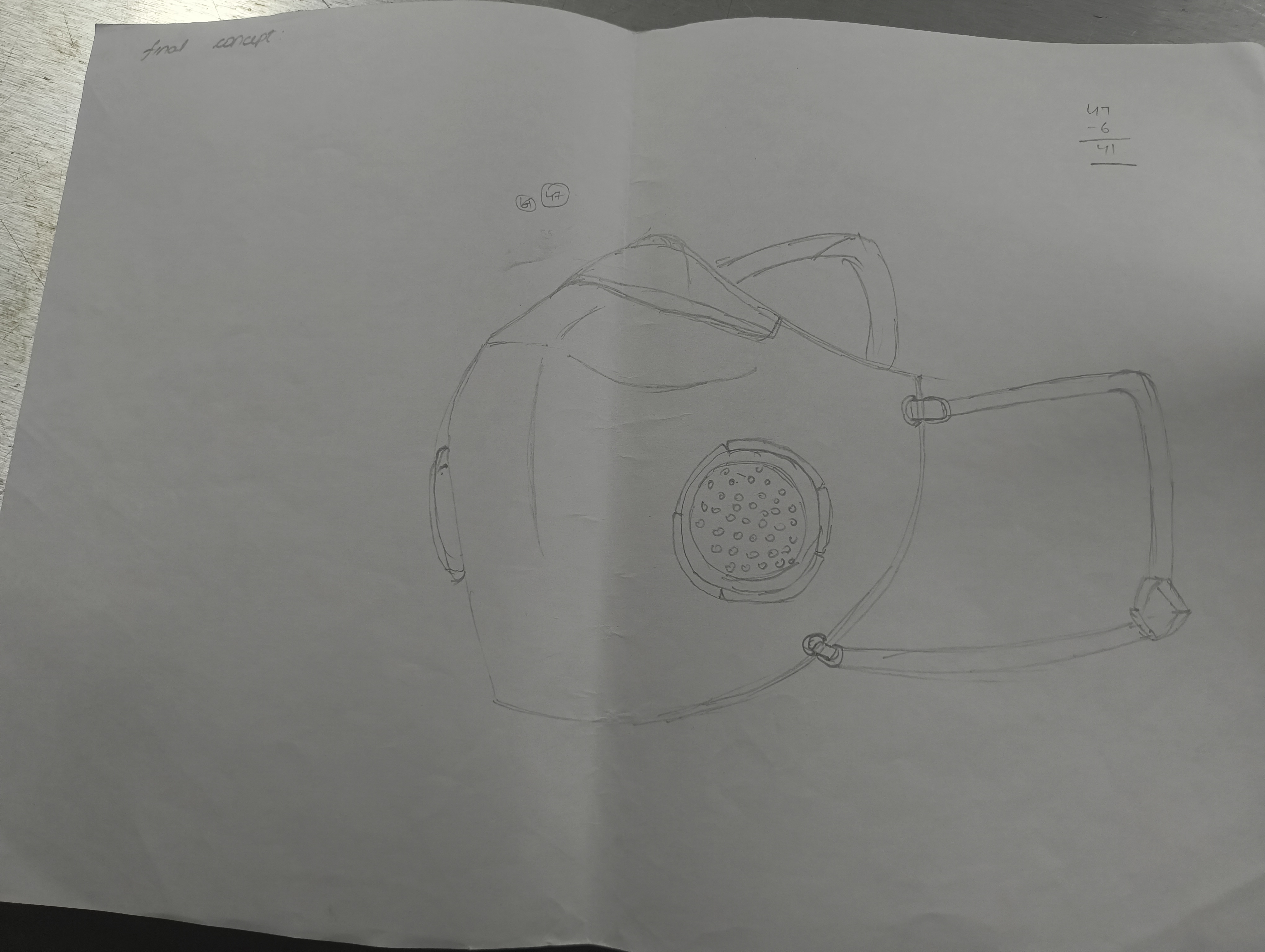
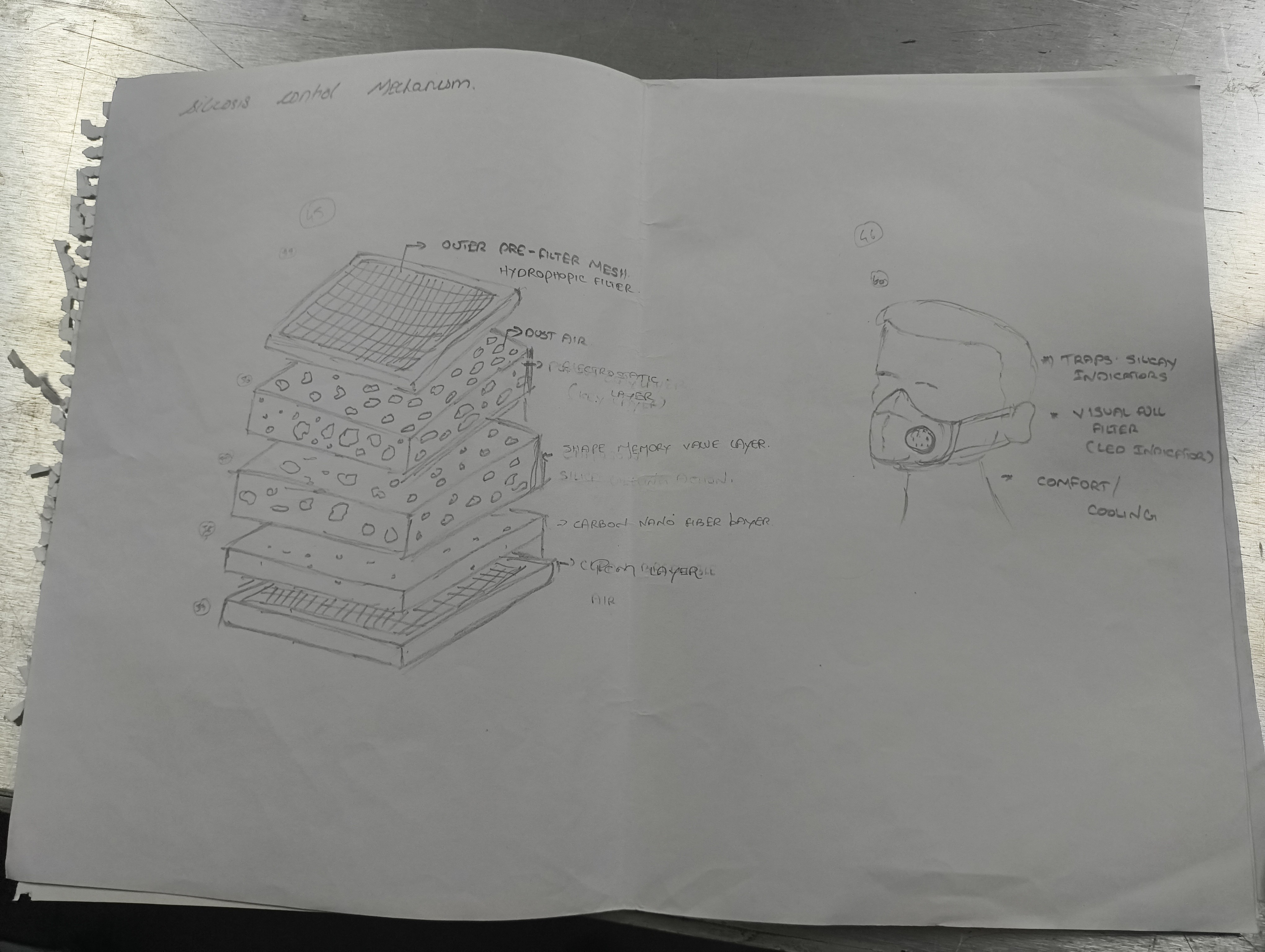
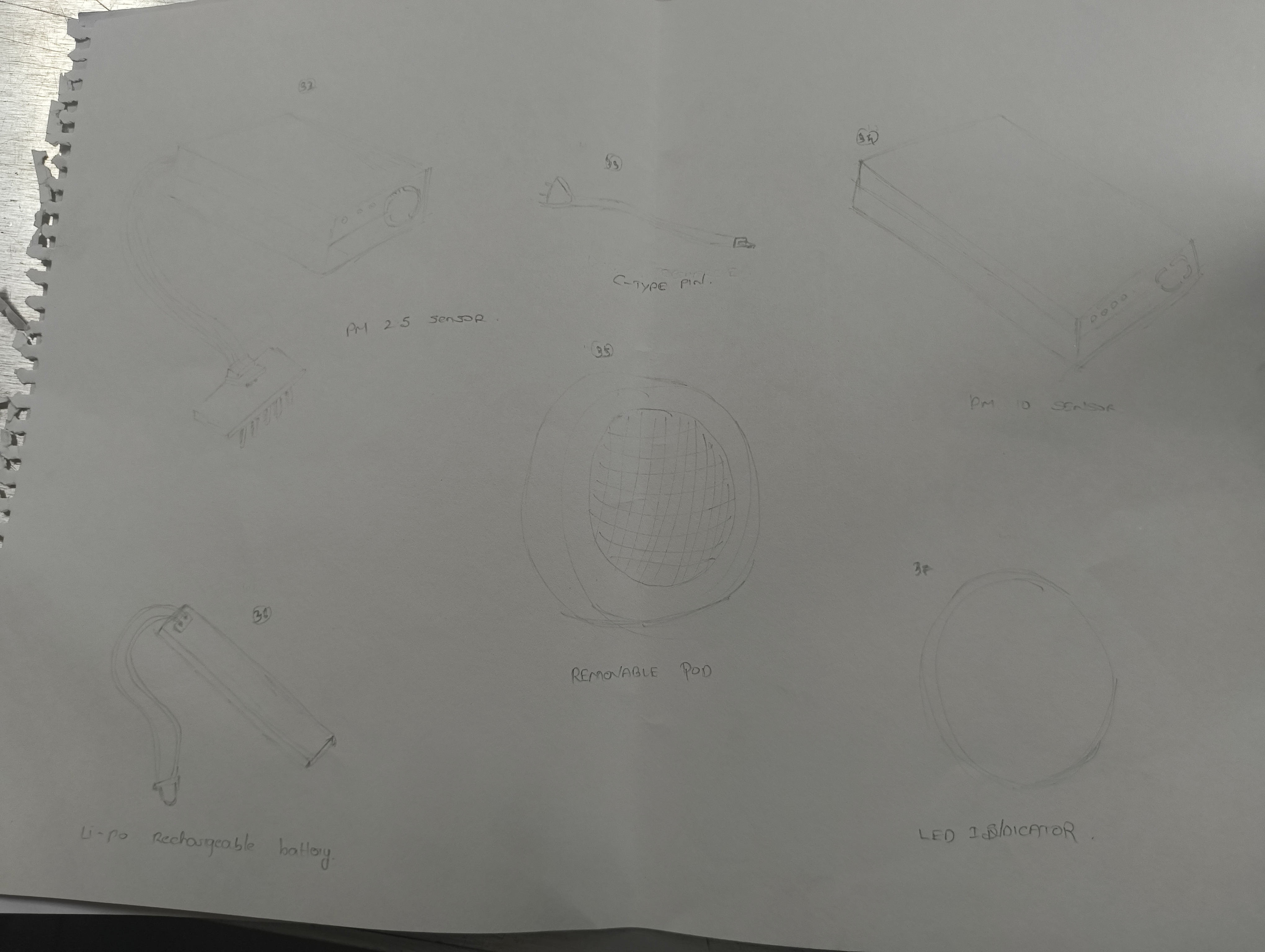
The final direction emerged as a cohesive system where filtration, sensing, and structure support each other without competing for attention. Modular elements were retained only where they improved usability or maintenance, and awareness was designed to remain subtle and reassuring rather than intrusive.
Final concept
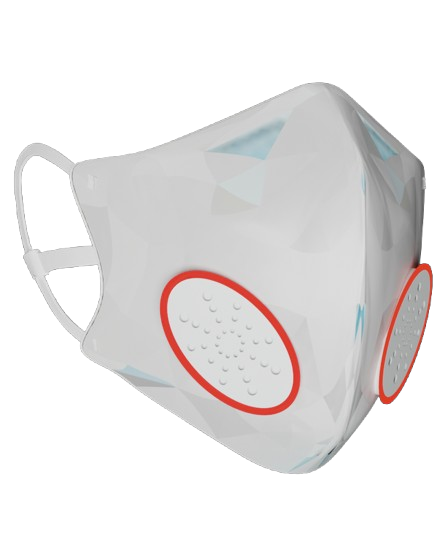
Air Sense Guard brings these decisions together into a wearable pollution mask designed for everyday urban life. The final concept balances protection, comfort, and awareness in a form that feels approachable rather than technical.
By integrating breathable filtration, intuitive modular components, and quiet sensing into a single system, the product supports consistent use without adding cognitive or physical burden. Protection becomes something users can trust instinctively, rather than something they have to actively manage.
Reflection
This project reinforced a core design insight: people don’t ignore safety they ignore inconvenience. By prioritising comfort, clarity, and trust over complexity, Air Sense Guard explores how design can transform protection from a reactive measure into a natural daily habit.
.png)
.png)